
I’m Going to Squibb This Sh*t

At 56, I am not winding down. I am still becoming.

For years, I have been telling people that I am going to Betty White this sh*t.
By this, I mean life. And work.
I plan to go out in my 90s still learning, creating, helping people and making them smile.
Betty White showed us what that could look like. Across nine decades, she kept showing up and doing some of her most beloved work.
But I may need to update my phrase:
I am going to Squibb this sh*t.
This year, at 96, June Squibb became the oldest acting nominee in Tony Awards history for Marjorie Prime. It was her first nomination, 67 years after her Broadway debut in the original production of Gypsy.
Read that again.
Her first Tony nomination did not arrive at 26, 46, 66 or even 86. It arrived at 96.
In her 90s, Squibb also took on her first leading film role in Thelma, returned to Broadway and made history. That is more than a charming story about aging well; it is a joyful rebuke to the limits we place on human possibility.
Today, I turn 56.
Fifty-six is not considered a milestone birthday. It does not end in zero or five, and no one sells decorations for it. Mostly, it sounds like a speed limit.
Still, I have decided it is a milestone. Not because of where I have arrived, but because of how much possibility I can still see from here.
I am building a business, shaping leaders and helping organizations make work more human. I still want to publish a book. I have a list of stages I intend to grace. And I want to become a professor who helps young adults solve difficult problems, understand leadership and recognize possibilities within themselves they may not yet be able to name.
I have plans.
Which is why I have been thinking about how quickly experience can be recast as expiration.
Recently, someone told me that my résumé and LinkedIn profile should include no experience more than 15 years old. I understand the strategy; a résumé should be relevant, not exhaustive. Do people really need to know what I was doing during the Clinton administration?
But consider the strange bargain we are asking experienced people to make:
Erase some of your experience, and perhaps someone will give you the opportunity to be valued for your experience.
We remove graduation dates, shorten career histories and replace “more than 25 years” with language that sounds less threatening. We Botox our résumés and hope no one notices the decades of capability beneath the surface.
I can laugh at the absurdity. I cannot ignore what it reveals.
Ageism rarely enters the room and introduces itself. It arrives disguised as a preference for more “energy.” It sounds like “overqualified,” “not the right culture fit” or “we need a fresh perspective.” It happens when experience is praised in public and priced out in private.
The research confirms that this is not imagined: AARP reports that 90 percent of workers over 50 believe age discrimination is common, while 60 percent have personally experienced subtle forms of it.
And now, a human being may not even make the first decision. AI-assisted hiring tools can rank candidates before a recruiter reads a single line. An algorithm does not need to see someone’s birthday to make assumptions about age; graduation dates, career length and titles can become proxies.
The danger is not that a machine suddenly developed a prejudice of its own. It is that we trained it on ours, then mistook its speed and scale for objectivity.
Ageism is real. But I do not want to spend my birthday shaking my fist at an algorithm.
I would rather claim what age has given me and what I still owe the years ahead.
Age is a score: it tells you how long someone has lived. It does not tell you whether they can learn, whether they are energized by the work or whether they can lead an organization somewhere it has never been.
The score is real. It is not the story.
Gen X has spent a lifetime adapting. We entered workplaces with landlines, fax machines, file cabinets and desktop computers large enough to have their own offices. We learned email, the internet, mobile technology, social media, virtual work and now artificial intelligence.
We did not grow up digital; we learned it.
Some of us even learned to stop replying all.
The ability to learn may be more valuable than the good fortune of being born after something was invented. And in the age of artificial intelligence, experience may matter differently, but not less.
AI can generate answers and identify patterns in seconds, but it cannot tell us whether we asked the right question or bear responsibility for what happens next. Someone still has to determine what is true, useful, ethical and human.
That requires discernment.
As information becomes abundant, judgment becomes more valuable. Wisdom is knowing what deserves to be trusted, recognizing the familiar pattern without missing the meaningful exception, and understanding not only what can be done, but what should be done and who might carry the consequences.
Older workers can bring that wisdom in abundance. We have watched confident plans fail, brilliant ideas collide with human reality and unintended consequences arrive late to the meeting. We have learned that urgency and importance are not the same. We have also learned that a technically correct answer may still be wrong for the people required to live with it.
But age alone does not make anyone wise. Years simply give us more experiences from which wisdom might be made; reflection, humility and curiosity do the making.
I do not want credit merely for the years I have worked. I want the responsibility of doing something meaningful with everything those years have taught me.
That requires something from me, too. I must remain curious, learn new tools, listen to new voices and allow my thinking to be challenged. I must be willing to become a beginner again and again.
Relevance is not guaranteed by age.
Neither is irrelevance.
Adaptability is a behavior, not a birth year.
I do not want a future in which older people must diminish younger people to prove their value, or younger people must push older people aside to make room for their own. Fresh thinking and seasoned judgment belong at the same table.
There is enough future for all of us.
At 56, I do not feel diminished. I feel distilled.
I know more about what matters to me, what I can offer and what I am no longer willing to carry. I also know how much I do not know, and that may be one of the most useful things experience has taught me.
I am not winding down. I am still becoming.
That is worth celebrating.
Betty White did not remain relevant by pretending she was young. June Squibb did not make history because someone graciously allowed a 96-year-old woman onto a stage; she made history because she could still command one.
That is the future I am claiming on this birthday.
I am going to keep learning, creating and helping. I am going to make my experience useful rather than merely accumulated. I am going to remain curious about who I am becoming and generous with what I have learned.
I am going to Squibb this sh*t.
When I am 96, please do not tell me I am inspiring for still working. Ask me what I am working on.
For my birthday, I would love to hear your answer:
What are you still becoming? What possibility are you refusing to let age take from you? And what do you hope someone asks you when you are 96?
Keep Wondering
My life and work are devoted to the belief that curiosity makes us better humans, leaders and organizations. If this essay made you wonder, begin here:
Researchers Uncover AI Bias Against Older Working Women — Stanford University
If this essay resonated with you, I'd be grateful if you'd share it with your friends and colleagues. And if it sparked a thought or reminded you of someone who helped shape your life, I'd love to hear about it in the comments below.
ABOUT THE AUTHOR
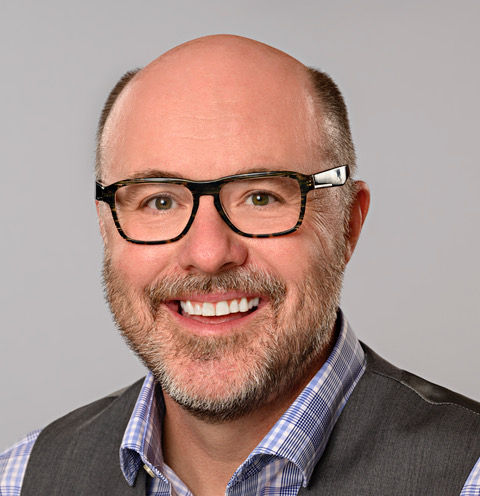
Kevin Finke is a human-centered leadership practitioner, consultant, and founder of Experience Willow. Through his writing and work, he helps leaders create the conditions where people feel seen, valued, connected, and able to do their best work. He believes that when we get the human experience right, performance follows.


Comments