
The Courage to Be Seen: The Day I Stopped Editing Myself
Updated: Jun 16
Part 1 of a month-long series

Today begins Pride Month.
For many people, Pride is associated with parades, rainbow flags, celebrations, and visibility. For me, it always begins with a different word: courage.
Not because courage is unique to the LGBTQ+ experience, but because courage is often required before any human being can become more fully known.
And if there is one lesson Pride Month has taught me over the years, it is this: the greatest burden many people carry is not being different. It is feeling like they have to hide it.
For much of my life, I became both a chameleon and an editor.
The chameleon learned how to blend into his surroundings. He could read a room, adapt to different environments, and become whatever the moment seemed to require. Those skills served me well. They helped me build relationships, navigate new situations, and succeed professionally. People often praised my ability to connect with different kinds of people, and they weren’t wrong.
But the editor was doing a different kind of work.
The editor was carefully deciding what others got to see. He changed pronouns, left details out of stories, and filtered conversations through a simple question: Is this safe? While the chameleon helped me fit in, the editor helped me stay hidden.
Together, they became remarkably effective partners. One helped me navigate the world. The other made sure the world never fully knew me.
I grew up in a small town in rural Illinois. I was a good student, an athlete, a son, and a friend. Like many people, I learned early how to navigate expectations. I learned what was rewarded, what was accepted, and what felt safer to keep to myself.
Over time, the chameleon and the editor became remarkably good at their jobs.
The chameleon helped me adapt. The editor helped me protect. Together, they made life feel more predictable. They reduced risk. They helped me avoid difficult conversations and uncomfortable questions.
At least that is what I told myself.
The truth is, becoming ourselves is rarely a single moment.
For me, it happened in pieces.
I shared parts of myself with a handful of close friends from my hometown. Later, I found a vibrant theatre community in Detroit that embraced me fully. Those relationships mattered. They gave me glimpses of what life felt like when I was not hiding. They showed me that authenticity was possible and that acceptance existed.
But authenticity arrived in pieces.
In some parts of my life, I was fully known. In others, the editor was still hard at work and the chameleon was still reading the room. I was still managing perceptions, calculating risks, and wondering what might happen if everyone knew the whole story.
If you have ever hidden a part of yourself, you probably know how easy it is to normalize the weight. What begins as protection slowly becomes habit. You stop noticing the energy it requires because carrying it becomes part of everyday life.
Only later do you realize how much of yourself it was costing.
Then, when I was thirty years old, an opportunity arrived that would change everything.
At the time, I was working in Detroit for Momentum Worldwide when one of our executive leaders, Patti Brose, approached me about moving to Atlanta to work on the Coca-Cola business.
Professionally, it was exactly the kind of opportunity I had hoped for: a promotion, a larger stage, and a bigger challenge. The kind of opportunity people dream about receiving.
Personally, it forced a choice.
If I accepted the move, Rob, my boyfriend and life partner of seven years, needed to move with me. And if Rob was moving with me, I could no longer keep my personal life neatly separated from my professional one.
The promotion came with a question: Would I finally stop hiding?
I wish I could tell you I immediately knew what to do. I did not.
What I felt was fear. Real fear.
For years, I had convinced myself that being openly gay might cost me my career, my livelihood, my family, and the future I had worked so hard to build. I was not worried about losing strangers. I was worried about losing people I loved.
Looking back, I understand that what I was experiencing was not weakness. It was vulnerability.
We often think of vulnerability as something that happens after safety has been established. In reality, vulnerability usually comes first. We show up before we know how the story ends. We tell the truth before we know how people will respond. We take the risk before we know whether it will be rewarded.
At thirty years old, I had no control over the outcome. I did not know how my colleagues would react. I did not know how my family would react. I did not know what opportunities might open or close.
All I knew was that continuing to hide felt increasingly incompatible with the life I wanted to live.
The irony is that when we spend enough time hiding, we become so focused on what we might lose that we stop imagining what we might gain.
What I remember most from that period was not the promotion itself. It was Patti.
She did not just offer me an opportunity. She offered me support, confidence, reassurance, and perhaps most importantly, the belief that I could succeed professionally without pretending to be someone else.
Looking back now, I can honestly say I might never have taken that opportunity without her.
Sometimes people change our lives in dramatic ways. More often, they change our lives by helping us believe we are capable of becoming who we already are.
So I took the leap.
I moved to Atlanta. Rob came with me.

And Atlanta became a wonderful place for my becoming.
The city, the work, the people, and the possibilities all seemed to create more room for me to exhale. For the first time in a long time, more and more of my life felt aligned. The distance between who I was and who others knew me to be began to shrink.
Somewhere along the way, I stopped editing. Not overnight, but steadily.
I stopped changing pronouns, filtering stories, and deciding what felt safe to reveal. I stopped carrying the exhausting responsibility of managing other people’s perceptions. I simply started talking about my life the same way everyone else talked about theirs.
I talked about Rob. I shared stories without rehearsing them first. I stopped wondering whether people would accept the whole truth and started living it.
And what surprised me most was how much energy that freed up.
I felt lighter, more present, more connected, and more myself.
The opportunities multiplied. I learned more, grew more, challenged myself more, and met people who broadened my perspective and stretched my thinking. The professional journey that followed became larger and richer than anything I could have imagined.
In many ways, I blossomed.
Thankfully, I was wrong about my career. Coming out did not limit my opportunities. It expanded them.
But I was not entirely wrong about the risks.
For a period of time, coming out created distance within my family. There was a difficult conversation early on, and it became the catalyst for much of what followed. After that, the distance was quieter and, in some ways, more painful.
Phone calls became less frequent. Visits became less common. For several years, relationships that had once been part of the rhythm of everyday life existed mostly through occasional conversations and holiday gatherings. Some relationships slowly found their way back. Others never fully did.
I do not share that with bitterness. Only honesty.
Because every family is made up of human beings doing the best they can with the experiences, beliefs, fears, and understanding they possess at a given moment in time. Life is rarely as simple as heroes and villains. More often, it is people trying to navigate change, expectations, love, disappointment, and hope all at once.
That reality was painful, but it also taught me something important. Authenticity does not guarantee acceptance. Sometimes it reveals where acceptance already exists. Sometimes it reveals where it does not.
And while that chapter brought pain, it also brought clarity.
Because people can only truly know the version of you that you allow them to see.
And for the first time in my life, I was allowing people to see all of me.

That experience taught me something important about Pride.
Pride is not about drawing attention to ourselves. It is about having the courage to be seen. To show up as we are, even when we cannot control how others might respond. To stop confusing belonging with fitting in. To stop measuring our worth by our ability to meet other people’s expectations. And to trust that a life built on authenticity is ultimately stronger than one built on performance.
That is why Pride Month matters.
Not because it celebrates superiority. Because it celebrates dignity.
For LGBTQ+ people, Pride emerged as a response to generations of hiding, apologizing, shrinking, and pretending. It became a declaration:
We belong here, and we matter.
Perhaps that is why Pride resonates with so many people beyond the LGBTQ+ community.
Because most of us know what it feels like to hide something: a fear, a struggle, a dream, a truth, or a part of ourselves we are not sure others will accept.
The details may be different, but the experience is surprisingly universal.
We all want to be accepted. We all want to belong. And most of us spend at least part of our lives wondering whether those things are possible if people truly see us.
The older I get, the more convinced I become that belonging begins at exactly that point. The moment we stop asking, “How do I fit in?” and start asking, “What would it look like to show up fully as myself?”
That question changed my life.
For me, that was the day the editor finally put down his pen. Not because I knew how the story would end, but because I finally had the courage to be seen.
Maybe that is where belonging begins for all of us.
Next week in The Courage to Be Seen: The Cost of Hiding.
What happens when we spend years editing ourselves, and what becomes possible when we finally stop?
If this essay resonated with you, I would love for you to subscribe and join me for the rest of this Pride Month journey.
If you found this blog post helpful, please share it with your friends and colleagues. If you have any comments, please share them below.
ABOUT THE AUTHOR
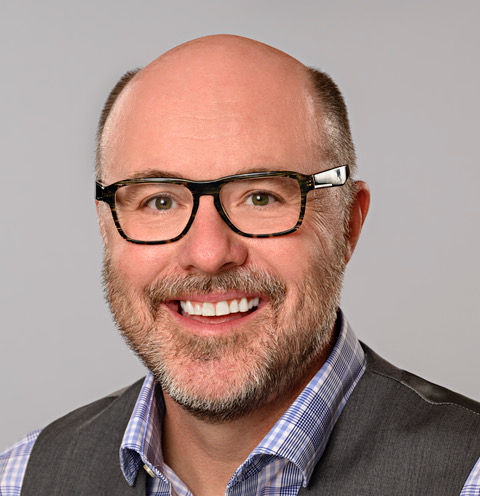
Kevin Finke is a human-centered leadership practitioner, consultant, and founder of Experience Willow. Through his writing and work, he helps leaders create the conditions where people feel seen, valued, connected, and able to do their best work. He believes that when we get the human experience right, performance follows.


Comments